
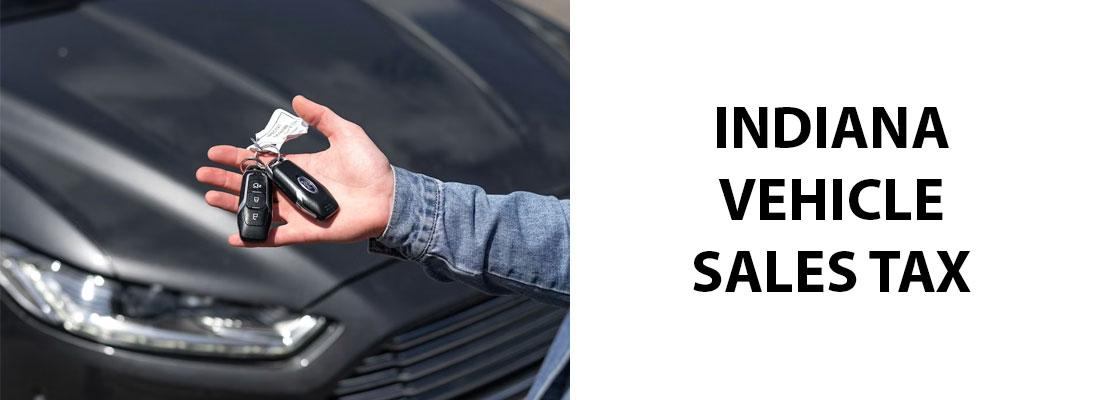
You’ve just found the perfect new (or new to you) car for the perfect price, but before you drive off, you’ll have to pay more than just the purchase price. Indiana vehicle sales tax, registration costs, and title requirements are all a required part of purchasing a vehicle.
Whether you’re buying from a dealership or a private seller, knowing how Indiana sales tax works can help you avoid surprises and plan your budget accordingly. In this guide, we’ll cover everything you need to know about car sales tax, including how much you’ll pay, when it’s due, and who pays.
What Are the Tax Laws in Indiana for Buying a Car?
When buying a car in Indiana, you will pay a 7% sales tax on the purchase price. Indiana also charges an excise tax to register the vehicle. These laws apply whether the car is new, used, purchased from a dealership, or purchased from a private seller.
The 7% sales tax is calculated by multiplying the purchase price of the vehicle by .07. For example, if you buy a truck for $25,000, you will owe $1,750 in taxes (25,000 x .07 = 1750). Discounts offered by the dealership, including trade-in value, are subtracted from the total purchase price, reducing the taxable amount. Say the dealer offers $4,000 for your older truck. Sales tax would be calculated after subtracting the $4,000 from the purchase price, and you would owe $1,470 instead of $1,750 (21,000 x .07 = 1470).
If you go out of state to buy your new vehicle, you may still owe sales tax when you transfer the title. Indiana requires payment when you register the vehicle. If you already paid sales tax in the state where you bought the car, Indiana may give you a credit for that amount. If the other state’s tax was lower than 7%, you will need to pay the difference.
Who Pays It?
Indiana sales tax on cars is typically paid for by the buyer. This is the case whether you’re buying in a private sale or from a dealership. Because taxes and registration costs are your responsibility, it’s a good idea to calculate these expenses before you finalize the sale, as they can add up.
How Do You Pay It?
How you pay Indiana sales tax on cars depends on where you buy the car. The process is different for dealership purchases and private-party sales. In both cases, the tax has to be paid before you can title and register the vehicle.
If you purchase a car from a dealership, the dealer usually calculates the sales tax and includes it in your final purchase price. Most buyers pay it as part of the down payment, financing agreement, or the total amount due at signing. The dealer then submits the tax to the state for you.
However, if you purchase from a private seller, you will need to pay the required tax when you register the car and transfer the title. To do this, you can go to the Indiana Bureau of Motor Vehicles website or to a branch near you. Bring the signed title, bill of sale, and any required documents. The BMV can determine the amount of tax you owe and take your payment.
When Is It Due?
Per tax laws in Indiana for buying a car, vehicle taxes are due at the time of purchase or when you register the vehicle. If you purchase from a dealership, the tax is due when you complete the sale. The dealer collects the tax and sends it to the state on your behalf.
For private-party vehicle purchases, sales tax is due when you transfer the title and register the vehicle with the BMV. The state gives you 45 days from the sale to transfer the title.
Title and Registration Requirements
In order to transfer the title and register your new vehicle, you will need to pay the 7% sales tax and the annual excise fee. The Indiana BMV handles title transfers and registration, but you can take care of it online or at a branch. The state gives you 45 days from the sale to title the vehicle. To complete the process, provide:
- A signed vehicle title or a notification from the dealer
- Bill of sale, if the seller didn’t fully fill out the title
- An Odometer Disclosure Statement (State Form 43230) if the odometer statement isn’t filled in on the title
- Physical Inspection Form (State Form 39530) if it’s an out-of-state vehicle and you’re not bringing it to the BMV or the VIN isn’t visible/accessible
- Identification
- Proof of insurance
- Emissions test if you reside in Lake and Porter counties
- Excise fee
Indiana charges an annual excise fee to register your vehicle. The actual amount depends on how old your vehicle is and its original retail cost. For example, a vehicle with a retail value of $37,000 costs $469 to register when it’s new and $63 when it’s eight years old. You can find more information about the excise tax here.
If you purchase your vehicle from Don Hinds Ford, we make the process easy for you. We handle collecting the fees and filling out required paperwork at the time of the sale.
Penalties for Late Payment
The state of Indiana gives you 45 days from the purchase of a vehicle to register, transfer the title, and pay required taxes and fees. If you wait too long to register and pay, you will be charged a $15 fee. If you are more than 60 days out from the sale of the vehicle, you will not be able to use the online portal to pay and register. Instead, you will have to bring the vehicle into a BMV branch near you.
What If You Live in Another State But Buy a Car in Indiana?
Car sales tax is based on where you register and title the vehicle. If you purchase a vehicle in Indiana but live in another state, you will need to title and register the vehicle in your state. You will likely need to pay your state’s taxes at the time of registration. Make sure you confirm requirements with your local DMV before purchasing.
Situations Where You Don’t Have to Pay Vehicle Sales Tax in Indiana
While Indiana vehicle sales tax applies to most car sales, there are some exemptions, including:
- Gifted vehicles
- Transfers between family members
- Inherited vehicles
- Trade-ins
- Vehicles purchased by a dealer for resale
- Vehicles purchased for a non-profit organization or governmental agency
Specific requirements for exemptions can vary, and you will typically need documentation. It’s a good idea to check with the Indiana BMV before assuming no tax is owed.
Visit Indiana’s Go-To Ford Dealership in Fishers!
Have more questions about Indiana vehicle sales tax? Looking for a new ride? Don Hinds Ford has you covered. Our friendly, knowledgeable staff will help you every step of the way–from test driving the latest Ford models and finalizing financing to servicing a vehicle you own. Stop by today to see why we’re one of the premier Ford dealerships near Indianapolis! We serve the entire Indianapolis area, including Carmel and Anderson.
Connect with us


