
Key Takeaways
● Indiana emissions testing isn’t statewide. Most drivers don’t need emissions testing, but certain counties still require it.
● Whether your vehicle needs testing depends on a few factors. Where it’s registered, its model year, fuel type, and vehicle type all play a role.
● The testing process is usually quick and straightforward. Most inspections take around 10-15 minutes if your vehicle is ready to go.
● Many failed emissions tests are an easy fix. Common issues like a loose gas cap or a check engine light can often be resolved without major repairs.
● Official Indiana vehicle emissions tests are typically free. If your vehicle qualifies for the state’s program, you generally won’t pay for the inspection itself.
● Routine maintenance goes a long way. Staying on top of regular service can help your vehicle pass the first time and avoid unnecessary headaches.
If you’ve been trying to figure out Indiana emissions testing or Indiana vehicle emissions requirements, you’re definitely not the only one. A lot of states have reduced or even eliminated emissions testing over the past few years, so it’s easy to wonder if Indiana still follows the old rules or not. The short answer is yes, but only in certain parts of the state. Keep reading, and we’ll break down where emissions testing is still required, which vehicles need to be tested, how often you’ll need an inspection, what happens if your vehicle doesn’t pass, and a few other helpful tips to help navigate the process.
Which Counties In Indiana Require Emissions Testing?
At this point, only two counties in Indiana currently require emissions testing: Lake County and Porter County.
If you live in or register your vehicle in one of the counties below, you’ll likely need to comply with Indiana’s Clean Air Car Check program.
| Indiana County | Emissions Testing Required? | Testing Frequency |
|---|---|---|
| Lake County | ✅ Yes | Every 2 years |
| Porter County | ✅ Yes | Every 2 years |
| Marion County (Indianapolis) | ❌ No | Not Required |
| Hamilton County | ❌ No | Not Required |
| Hendricks County | ❌ No | Not Required |
| Allen County | ❌ No | Not Required |
| St. Joseph County | ❌ No | Not Required |
| Vanderburgh County | ❌ No | Not Required |
| All Other Indiana Counties | ❌ No | Not Required |
What Vehicles Require Emissions Testing in Indiana?
Vehicles that commonly require Indiana emissions testing include:
● Gasoline-powered passenger cars and SUVs registered in participating counties.
● Light-duty pickup trucks and vans that are within the state’s weight limits.
● Vehicles within the required model year range, as specified by Indiana’s emissions program.
● Vehicles due for their biennial (every two years) emissions inspection at registration renewal.
Most gasoline-powered passenger cars, SUVs, pickup trucks, and vans with model years 1976 through 2022 are generally required to undergo emissions testing if they’re registered in a participating county and have a gross vehicle weight rating (GVWR) of 9,000 pounds or less. The four newest model years are typically exempt, and eligible vehicles are tested every two years based on whether the model year is odd or even. A lot of diesel vehicles, motorcycles, electric vehicles, antique vehicles, and heavier commercial vehicles are exempt from testing.
What Are the Indiana Vehicle Emissions Requirements?
Whether your vehicle needs an emissions test depends on a bit more than just where you live. Indiana also considers factors like your vehicle’s age, fuel type, weight, and where it’s registered. In counties that require emissions testing, these are the general requirements:
● Registered in a participating county such as Lake or Porter County.
● Gasoline-powered vehicles are generally subject to testing, while many diesel vehicles are exempt.
● Model years that fall within the state’s testing range are generally required to be inspected, while very new and much older vehicles might be exempt.
● Testing is generally required every two years when it’s time to renew your vehicle registration.
● Your vehicle must pass the emissions inspection before registration can be renewed if it’s subject to the program.
What’s the Process?
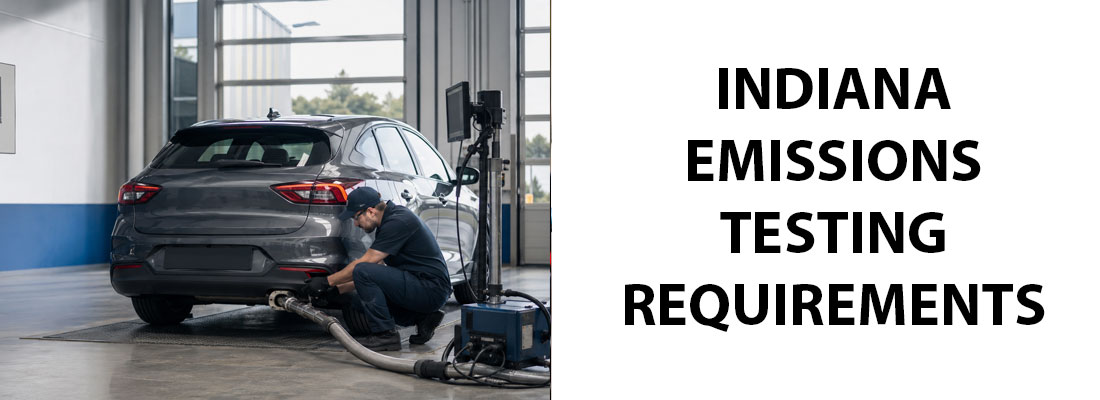
If your vehicle needs emissions testing, the process is actually pretty straightforward and usually only takes about 10-15 minutes. Here’s a quick breakdown:
1. Confirm your vehicle needs testing. Check your registration renewal notice or verify that your vehicle is registered in a county that requires emissions testing.
2. Prepare your vehicle. Make sure the Check Engine Light isn’t on, your battery hasn’t recently been disconnected, and your vehicle has been driven enough for its emissions monitors to be ready.
3. Visit a nearby emissions testing station. A technician will verify your vehicle information and administer the appropriate inspection based on your vehicle’s model year.
4. Complete the emissions test. Most newer vehicles receive an OBD-II scan, while some older qualifying vehicles might undergo a tailpipe emissions test.
5. Receive your results. If your vehicle passes, the results are sent to the state, and you’re ready to renew your registration. If it doesn’t pass, you’ll be receiving information about what needs to be repaired before coming back for a retest.
What Are the Most Common Reasons For Failed Emissions Tests?
● Check Engine Light Is On: This is one of the most common reasons vehicles fail. Even if your car seems to be running fine, an illuminated check engine light often indicates some sort of emissions-related problem.
● Faulty Oxygen Sensor: Oxygen sensors help regulate your engine’s air-fuel mixture. When one fails, your vehicle might produce higher emissions and trigger a check engine light.
● Loose or Damaged Gas Cap: A gas cap that isn’t sealed properly can allow fuel vapors to escape, causing your vehicle to fail.
● Catalytic Converter Problems: A worn or damaged catalytic converter can’t effectively reduce harmful emissions and is a common cause of test failures.
● Evaporative Emissions (EVAP) System Issues: Leaks or faulty components in the EVAP system can prevent your vehicle from meeting emissions standards.
● Not-Ready OBD Monitors: If you’ve recently disconnected your battery or cleared diagnostic codes, your vehicle’s onboard emissions monitors might not be ready. Driving normally for several days often allows these systems to reset before testing.
● Worn Spark Plugs or Ignition Components: Engine misfires caused by worn spark plugs or ignition coils can increase emissions and cause your vehicle to fail.
What Happens If You Fail?
Don’t panic if your vehicle doesn’t pass the first time. A fair number of emissions failures are caused by simple routine maintenance items that can be repaired fairly quickly. Once the issue has been fixed, you can schedule a retest and get your vehicle back into compliance.
What Emissions Levels Are Compliant?
There isn’t one specific emissions number that every vehicle in Indiana needs to meet. Most newer vehicles simply need to pass an OBD-II diagnostic scan with no emissions-related trouble codes or check engine light. Keeping up with regular maintenance and fixing any engine issue before your inspection gives you the best chance of passing.
Stay Ready for the Road
Making sure your vehicle stays compliant with Indiana emissions requirements doesn’t have to be as complicated as it sounds. Once you know if your vehicle is subject to testing and understand what inspectors are looking for, it’s easy to stay ahead of any deadlines and avoid any issues.
If your vehicle is due for maintenance or you’re thinking about upgrading to something newer, stop by and see us at Don Hinds Ford in Fishers, Indiana. Our knowledgeable team is here to help with everything from routine service to finding the right new or pre-owned vehicle for your unique lifestyle. We can help you with all your service needs, such as transmission service, oil changes, tires, and more.
FAQs
Is vehicle emissions testing still required in Indiana?
Yes, but only in certain parts of the state. Most Indiana drivers don’t need regular emissions testing. However, vehicles registered in Lake and Porter counties might still be required to pass an emissions inspection before registration renewal.
Where can you get vehicle emissions testing in Indiana?
If your vehicle requires testing, you can visit an authorized Indiana emissions testing station in your area. Most testing locations are part of the state’s Clean Air Car Check program, and you can find the nearest station based on the county where your vehicle is registered.
What cars need emissions testing in Indiana?
Not every vehicle needs an emissions test. Requirements depend on where your vehicle is registered, along with factors like its model year, fuel type, weight, and registration status. Most newer gasoline-powered passenger vehicles in participating counties are subject to testing, while many other vehicles are exempt.
How much do Indiana vehicle emissions tests cost?
In most cases, nothing at all. Indiana vehicle emissions tests are typically provided at no charge for eligible vehicles tested through authorized state emissions stations. If your vehicle fails, you might have repair costs before returning for a retest, but the test itself is generally free.
Connect with us


